
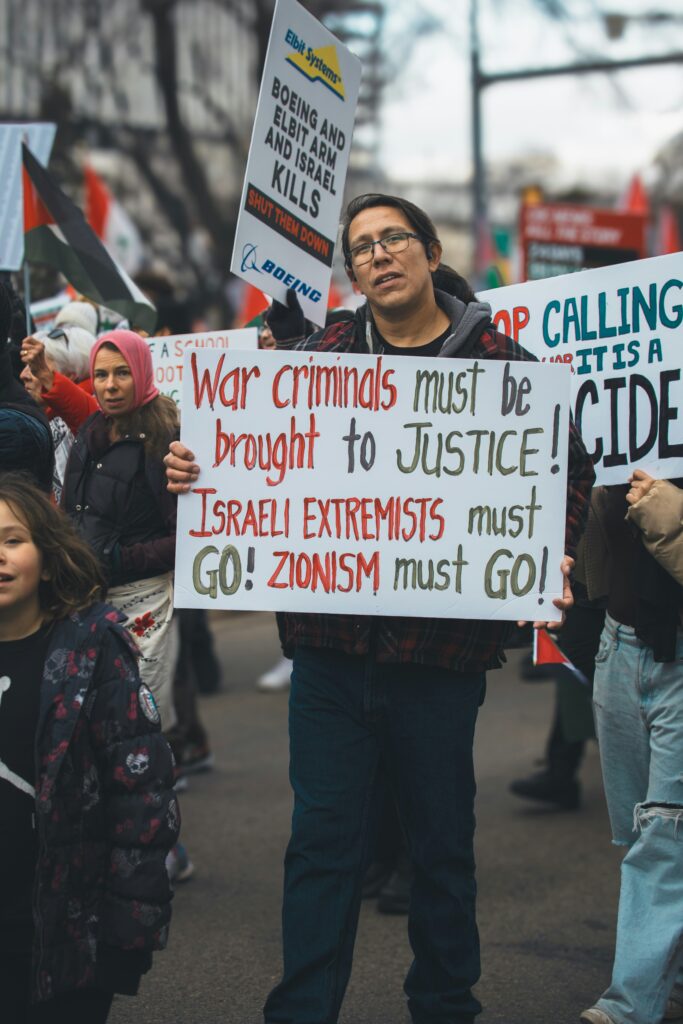
This boycott stands as one of the most massive global acts of mass political resistance in the 21st century in support of Palestine.
At one point, the people of Banda Aceh measured progress by the presence of KFC in their city. It was a benchmark of sorts; after all, in almost every major city across the globe, one could find a branch of the American fast-food giant.
About three years ago, the first McDonald’s outlet opened in Banda Aceh. It was built on a vast plot of land, featuring a stunning two-story building with modern architecture. At its opening, the restaurant was swarmed by crowds. Previously, Aceh residents had to travel to Medan just to enjoy the world’s number one fast-food chain.
However, in a very short time, the McDonald’s restaurant that had once gone viral and been packed with visitors suddenly went quiet. This was the direct result of a boycott against products perceived to support Zionism and Israel, following Israel’s massive offensive on Gaza, Palestine.
Even the KFC outlet, which had stood in Banda Aceh for nearly 20 years, now sits empty as visitors abandon it. The same fate has befallen Pizza Hut. The boycott, as a global movement, has deeply permeated Banda Aceh.
The boycott of pro-Zionist products has gone viral for a reason. It is one of the most significant global political movements of this century.
Multinational corporations such as Starbucks, McDonald’s, PepsiCo, Unilever, and Walt Disney have reported declines in stock prices and market value. For instance, Starbucks lost nearly US12 billion (around Rp 186 trillion) in market value in just one month at the end of 2023, with shares dropping 8.96%. McDonald’s recorded a stock dip to its lowest level of US245.5 per share in October 2023.
In Indonesia, companies like PT Sarimelati Kencana Tbk (operators of Pizza Hut) and MAPB (operators of Starbucks) reported a decline in performance, with MAPB shares plunging more than 8% in the last six months of 2023.
KFC Indonesia recorded a loss of Rp 557.08 billion—partially due to the boycott combined with the lingering effects of the pandemic—leading to the closure of 47 outlets and the layoff of 2,274 employees.
The BDS (Boycott, Divestment, Sanctions) movement has reportedly caused significant economic damage to Israel. Al Jazeera noted that Israel’s losses reached US$600 million per week (around Rp 9.5 trillion) due to the global boycott. Foreign investment in Israel fell by 46% in 2014, and companies like Carmel Agrexo faced liquidation due to export difficulties.
Statistically, the global boycott of pro-Israel products is genuinely impactful, and Banda Aceh is no exception. The awareness of Banda Aceh’s citizens regarding global political issues related to Gaza and Palestine is remarkably high.
Although Aceh is the westernmost province of Sumatra and can sometimes seem isolated, the massive spread of information via the internet and social media has integrated its people into this global movement.
This massive boycott also demonstrates that global Muslim issues, such as Palestine, are of particular concern to the people of Aceh. As an ethnic entity with strong historical roots and Islamic culture, the people of Aceh show deep empathy for their fellow Muslims in Gaza. Through this boycott, at least three US-based fast-food restaurants—viewed as contributors to the Israeli Zionist regime—have suddenly lost their customers.
The Rise of New Fast-Food Contenders Amidts The Support of Palestine
Media reports indicate that this boycott has boosted foot traffic at domestic fast-food chains like Steak & Shake. In Banda Aceh, domestic fried chicken chains such as Richeese, an Indonedian fast-food restaurant, have opened several new branches. It appears Richeese is attempting to capture the fried chicken market share previously held by KFC, viewing the boycott as an opportunity to dominate the local market.
Beyond Richeese, a new fried chicken restaurant called Al-Maz Fried Chicken has opened at a former Pizza Hut location in the Lamnyong area. This franchise hails from Saudi Arabia, offering KFC-style fried chicken with signature Arabian spices and menu options like biryani rice.
Whenever I pass by Al-Maz, it is always packed. The enthusiasm of Banda Aceh residents to taste this Arabian-style fried chicken is immense. Al-Maz has become an antithesis to KFC. While KFC is American and associated with pro-Israel stances, Al-Maz is seen as a “symbol” of resistance against Zionism and the West. Since Al-Maz is owned by Muslims, the community feels it is better to consume products from Muslim-owned businesses.
The Preferences of the Muslim Middle Class in a Support of Palestine
The current boycott is merely a catalyst for the Muslim middle class regarding their daily consumption patterns. While the boycott has caused a significant—even massive—shift in preferences, this awareness had actually begun to build long before.
In Indonesia, a prime icon of this Muslim middle-class consciousness is the domestic cosmetic brand, Wardah. Beyond being Muslim-owned and locally made, Wardah emerged from the concerns of the Muslim middle class regarding the “halal” status of cosmetic products.
By tapping into this demand for halal products, Wardah entered the market and ensured its products were certified halal for consumers. Furthermore, Wardah uses a brand name derived from Arabic terminology; Wardah means rose, a symbol of femininity and beauty. Wardah successfully packaged a new identity for its consumers: the Indonesian Muslim middle-class woman. Today, it is one of the best-selling cosmetic brands on the market.
Reflecting on these cases, consumer preference is not merely a matter of business. It involves political, social, and psychological dimensions. Brands like Al-Maz and Wardah have emerged as symbols representing the identity of the modern Muslim middle class.
Industry is no longer just about selling a product; it is about selling symbols that align with the psychological imagination, social background, and political preferences of the consumer.