
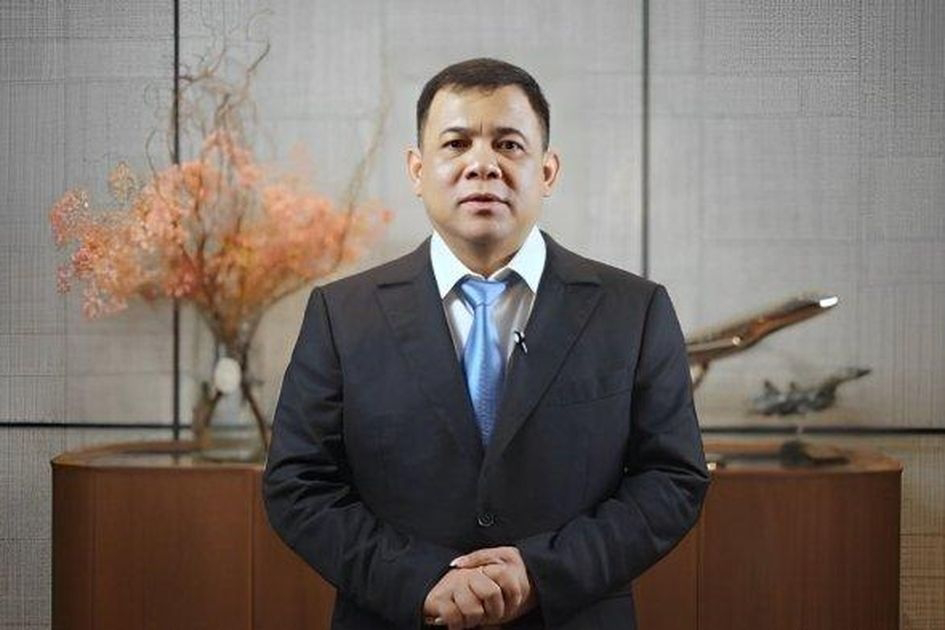
JAKARTA — In the lexicon of Indonesian power, few names carry as much weight — or as much controversy — as Andi Syamsuddin Arsyad. Better known as Haji Isam, this 48-year-old tycoon from the forests of South Kalimantan has become the defining face of a new Indonesian oligarchy: a class of businessmen who have turned political proximity into extraordinary economic dominance.
He controls roughly 60 companies. His publicly tracked wealth exceeds Rp101 trillion — approximately US$6.1 billion. Four of his closest associates sit in the cabinet of President Prabowo Subianto. And in 2025, the stocks affiliated with his conglomerate, Jhonlin Group, delivered some of the most staggering returns ever recorded on the Indonesia Stock Exchange, with one share surging more than 4,000 percent in a single year.
This is the story of how an oligarch is made.
From Batulicin to the Summit of Indonesian Oligarchy
Haji Isam was born on January 1, 1977 in Batulicin, a small coastal town in South Kalimantan, to a tobacco trader father from Bone, South Sulawesi, and a Banjar mother. He is of Bugis noble descent — though his early life bore no trace of privilege.
After finishing high school in 1996, he could not afford university. He worked as a logging truck driver and motorcycle taxi rider, navigating the rough roads of Kalimantan. It was unglamorous, uncertain work — yet it placed him close to the industries that would eventually make him one of the richest men in Southeast Asia.
The inflection point came in 2001, when he encountered Johan Maulana, a Chinese-Indonesian coal miner from Surabaya. Under Johan’s mentorship, Haji Isam absorbed the mechanics of mining operations. Two years later, armed with a borrowed capital loan, he founded CV Jhonlin Baratama— the embryo of what would become a national conglomerate. The company secured a contracting role at PT Arutmin Indonesia and rapidly scaled to produce 400,000 tonnes of coal per month.
What followed over the next two decades was the textbook construction of an oligarchic empire: vertical integration, diversification into state-adjacent industries, strategic political alignment, and — critically — the cultivation of a personal brand that made him simultaneously beloved and feared.
The Empire of Haji Isam: 60 Companies, Every Sector That Matters
Jhonlin Group today is a sprawling conglomerate with tentacles in nearly every sector the Indonesian government considers strategic:
Energy & Mining: PT Jhonlin Baratama remains the group’s financial engine, extracting hundreds of thousands of tonnes of coal monthly from South Kalimantan’s rich seams.
Biodiesel & Agribusiness: PT Jhonlin Agro Raya (JARR), inaugurated by President Joko Widodo himself in 2021, produces up to 1,500 tonnes of biodiesel daily — positioning the group at the center of Indonesia’s mandatory B40/B50 biofuel program.
Maritime Logistics: Jhonlin Marine & Shipping operates a fleet of more than 70 coal barges, controlling the supply chain from mine to port.
Aviation: Jhonlin Air Transport, a regional carrier in Kalimantan, formerly led by Dudy Purwagandhi — today Indonesia’s Minister of Transportation.
Infrastructure & Sugar: A 20,000-hectare sugarcane plantation and integrated sugar mill in Bombana, Southeast Sulawesi, built from 2017 onward as part of the national sugar self-sufficiency agenda.
Palm Oil: PT Pradiksi Gunatama (PGUN) in East Kalimantan, a 22,782-hectare plantation that became the stock market’s most talked-about ticker in 2025.
In July 2024, Haji Isam signed a memorandum of understanding in Shanghai to purchase 2,000 excavator units from Sany Group — a single order that made Jhonlin Group the world’s largest buyer of excavators in history. The machines were destined for the Merauke rice development project in South Papua, a presidential mandate.
The group’s total annual zakat payment of Rp250 billion in 2022 — Islam’s obligatory wealth tithe, set at 2.5% of net assets — implies a non-public asset base of roughly Rp10 trillion. When combined with his publicly listed holdings, CNBC Indonesia calculated his total wealth at Rp101.3 trillion (US$6.1 billion) in September 2025 — surpassing established billionaires including Alfamart’s Djoko Susanto.
The Political Machine: How an Oligarch Builds a Cabinet
No honest account of Haji Isam’s success can omit the political architecture that sustains it. His rise is inseparable from his ability to position himself at the center of Indonesian political power — across multiple administrations, multiple parties, and multiple ideological cycles.
This is the hallmark of a mature oligarchy: not loyalty to a single patron, but structural embeddedness in the system itself.
The Jokowi Years: Bankrolling Power, Harvesting Access
Haji Isam served as Deputy Treasurer of the National Campaign Team for Jokowi–Ma’ruf Amin in the 2019 presidential election. The return on that investment was tangible: President Jokowi personally inaugurated JARR’s biodiesel plant in 2021, and a lucrative sugarcane concession in Bombana — criticized by multiple parties for allegedly violating land-use regulations — was facilitated under Agriculture Minister Amran Sulaiman, who is Haji Isam’s own cousin.
The Prabowo Era: From Financier to National Trustee
When political winds shifted ahead of the 2024 election, Haji Isam moved with them. He became one of Prabowo Subianto’s most significant campaign financiers, with reported donations exceeding Rp2 trillion. Investigative and policy reports note that Prabowo consulted him closely when assembling his first cabinet.
The outcome was remarkable even by Indonesian oligarchic standards: four close Haji Isam associates were appointed to Cabinet Merah Putih:
Dudy Purwagandhi, Minister of Transportation was the Former CEO, Jhonlin Air Transport. Andi Amran Sulaiman, Minister of Agriculture is cousin of Haji Isam. Dodi Hanggodo, Minister of Public Works wa Former PGUN commissioner; linked to Jhonlin via Colestar Resources (BVI). Budi Santoso, Minister of Trade is Close associate of Haji Isam; nominated through PAN.
The web extends further. Sulaiman Umar, his son-in-law, was appointed Deputy Minister of Forestry. His sister, Erna Lisa Halaby, won the Banjarbaru mayoral election in 2024. He sits on the Advisory Board of Kadin Indonesia for 2024–2029. And in August 2025, President Prabowo personally awarded him the Bintang Mahaputera Utama — one of Indonesia’s highest state honors — at the Istana Negara.
For a student of oligarchy theory, the pattern is unmistakable: Haji Isam has not merely purchased influence. He has installed it at the institutional level.
The Merauke Mandate: Where Oligarchy Meets Public Policy
The clearest expression of this fusion came when President Prabowo designated Haji Isam to lead Indonesia’s 1 million hectare rice field development in Merauke, South Papua — the flagship project of the new administration’s food sovereignty agenda. “Haji Isam received a direct order from Prabowo,” a National Food Task Force official told CNN Indonesia.
Jhonlin mobilized the 2,000 excavators. The project achieved its first harvest in May 2025, yielding 2.5–2.8 tonnes per hectare in Wanam District — a result the government celebrated as proof of concept. The government has budgeted Rp15 trillion for the broader food sovereignty program, with Merauke as its centrepiece and Jhonlin as its primary contractor.
The project, however, remains deeply contested. Environmental groups and the indigenous Malind people of Merauke have raised alarm over deforestation, the destruction of customary land, and what critics have called the militarization of agricultural policy — with at least five TNI military battalions reportedly stationed in the area to secure the project. Auriga Nusantara recorded a 66% spike in Indonesian deforestation in 2025, partly attributed to Merauke-linked land clearing.
Controversies: The Shadow Side of an Indonesian Oligarchic Rise
Scrutiny of Haji Isam’s methods has grown in proportion to his power.
Alleged elimination of competitors: Reports allege that two coal mining rivals — Haji Bachrullah and Haji Amir Nasarudin — were prosecuted for illegal mining in protected forest areas, and that following their imprisonment, their land was absorbed into Jhonlin Baratama operations. Haji Isam has categorically denied involvement.
Police connections: A 2010 flight manifest showed Haji Isam traveling for Umrah alongside senior police officials. He has acknowledged knowing senior officers, while denying that any such relationships benefited his business.
The Bombana concession: The government’s granting of a large plantation concession in Bombana was criticized as violating spatial planning regulations, with multiple parties alleging the concession was enabled by political proximity to the Agriculture Ministry — then led by his cousin Amran Sulaiman.
Offshore coal trading structure: In a December 2025 investigative paper, academic Michael Buehler revealed that Jhonlin Group’s coal exports flow almost exclusively to three offshore trading companies registered in the British Virgin Islands and Singapore. A leaked 2020 internal bank email described one of these companies — Colestar Resources Ltd — as a “purely coal trading arm” buying from Jhonlin, with no fixed assets, US$1 in paid-up capital, and ownership linked to Dodi Hanggodo — now Indonesia’s Minister of Public Works. Buehler’s analysis raises the possibility of transfer pricing arrangements that could shift profits offshore in potential violation of Indonesian tax regulations.
On the Indonesian Stock Exchange: When Oligarchic Sentiment Moves Markets
The most dramatic public manifestation of Jhonlin Group’s political ascendancy in 2025 was not in Merauke or Jakarta — it was on the trading floors of the Indonesia Stock Exchange (IDX), where four affiliated stocks delivered returns that defied rational valuation.
1. PT Pradiksi Gunatama Tbk (PGUN)
PGUN — a palm oil plantation in East Kalimantan controlled by Haji Isam’s children Jhony Saputra and Liana Saputri — became the IDX’s most extraordinary story of the year.
From Rp424 in January 2025, the share price rocketed to a peak of Rp18,400 — a gain exceeding 4,000% — before the IDX stepped in with multiple suspensions. The stock closed the year at approximately Rp9,600, still representing a 2,164% gain, with a market capitalization of Rp55 trillion.
The fundamental picture, while genuinely improving, tells only part of the story. Net profit for H1-2025 surged 690% to Rp83.53 billion, and revenue rose 48.9% to Rp385.17 billion. Yet 87–92% of PGUN’s revenue flows from its related party JARR — a structural dependency that raises questions about the sustainability and independence of its earnings. The company was flagged three times by IDX surveillance for abnormal trading patterns and subjected to three separate trading suspensions.
2. PT Jhonlin Agro Raya Tbk (JARR)
JARR — the biodiesel arm of Jhonlin Group, in which Haji Isam holds an 86.64% controlling stake — surged approximately 1,270% from Rp340 to a peak of Rp4,250, before closing the year at Rp3,170, a 922% gain, with a market capitalization of Rp29 trillion.
Full-year 2025 revenue reached Rp4.27 trillion, up 10.62%, while H1 net profit jumped 82.5% to Rp160.39 billion. The company also materially reduced its total liabilities. But its price-to-book value of 11.51x — far above the sectoral average — and two separate IDX trading suspensions point to a valuation driven as much by political sentiment as by earnings growth. After its second suspension was lifted on October 3, 2025, JARR was moved to the Full Call Auction (FCA) special monitoring board.
3. PT Dana Brata Luhur Tbk (TEBE)
TEBE, the coal mining infrastructure operator in which Haji Isam holds a 49% indirect stake through PT Dua Samudera Perkasa, rose between 285% and 351% during 2025 to approximately Rp2,410, reaching a market capitalization of Rp3.6 trillion.
Its fundamental story, however, was one of deterioration: net profit fell 6.4% and revenue dropped 17.6% in the first nine months of 2025 — underscoring how disconnected the share price movement was from underlying performance. TEBE was suspended twice by the IDX.
4. PT Fast Food Indonesia Tbk (FAST) — KFC Indonesia
The most tangential connection in the Jhonlin orbit, FAST surged approximately 148% after Haji Isam’s daughter Liana Saputri, through PT Shankara Fortuna Nusantara, acquired a 15% stake in PT Jagonya Ayam Indonesia (JAI), a FAST subsidiary. The stock’s rise was driven entirely by association — FAST itself recorded a net loss of Rp138.75 billion in H1-2025 and declining revenues. It, too, was suspended by the IDX.
The Anatomy of a Market Phenomenon
Taken together, the four stocks’ combined market capitalization briefly exceeded Rp150 trillion — a figure that placed Haji Isam’s publicly tracked wealth at Rp101.3 trillion (US$6.1 billion), calculated by CNBC Indonesia in September 2025.
What drove it? Analysts point to a mix of genuine and speculative forces. On the fundamental side: Indonesia’s mandatory biodiesel program creates structural, policy-guaranteed demand for JARR; CPO prices remained elevated; and Jhonlin’s earnings growth, while not sufficient to justify the valuations, was real.
But the dominant driver was something harder to quantify: oligarchic premium — the market’s bet that a conglomerate with four ministers in cabinet, a presidential food mandate, and the ear of the head of state will continue to receive favourable policy treatment, project allocations, and regulatory forbearance for years to come.
The anomalies were glaring. PGUN at its peak carried a Rp105 trillion market capitalization while generating daily trading volumes of only tens of billions of rupiah — a liquidity mismatch that makes orderly exit almost impossible for large holders. Three of four stocks were repeatedly flagged for abnormal trading patterns. TEBE’s stock tripled while its business contracted.
These are not the characteristics of an efficient market pricing in fundamentals. They are the characteristics of a market pricing in political access — and the risks that come with it.
Conclusion: The Architecture of Modern Indonesian Oligarchy
Haji Isam did not buy his way to the top. He built it — through decades of calculated risk-taking, relentless expansion, and a political intelligence that rivals anything found in the country’s professional political class.
But the architecture of his success is also, inescapably, the architecture of Indonesian oligarchy at its most fully developed: the fusion of resource extraction, regulatory access, state project allocation, and capital market influence into a single, interlocking system in which political proximity is the ultimate competitive advantage.
From truck driver to tycoon. From Batulicin to the Istana Negara. From Rp0 to Rp101 trillion.
The story of Haji Isam is, in miniature, the story of how power consolidates in 21st-century Indonesia — and a reminder that in markets shaped by oligarchic dynamics, investors who ignore the political dimension do so at their peril.
*Editor’s Note: This article draws on publicly available data, listed company financial reports, verified media reporting, and publicly accessible investigative documents including academic research published through December 2025. Financial figures and shareholding data refer to the 2025 reporting period. This article does not constitute investment advice. Allegations cited in the Controversies section are drawn from media and academic sources; Haji Isam has denied wrongdoing in the matters referenced.