
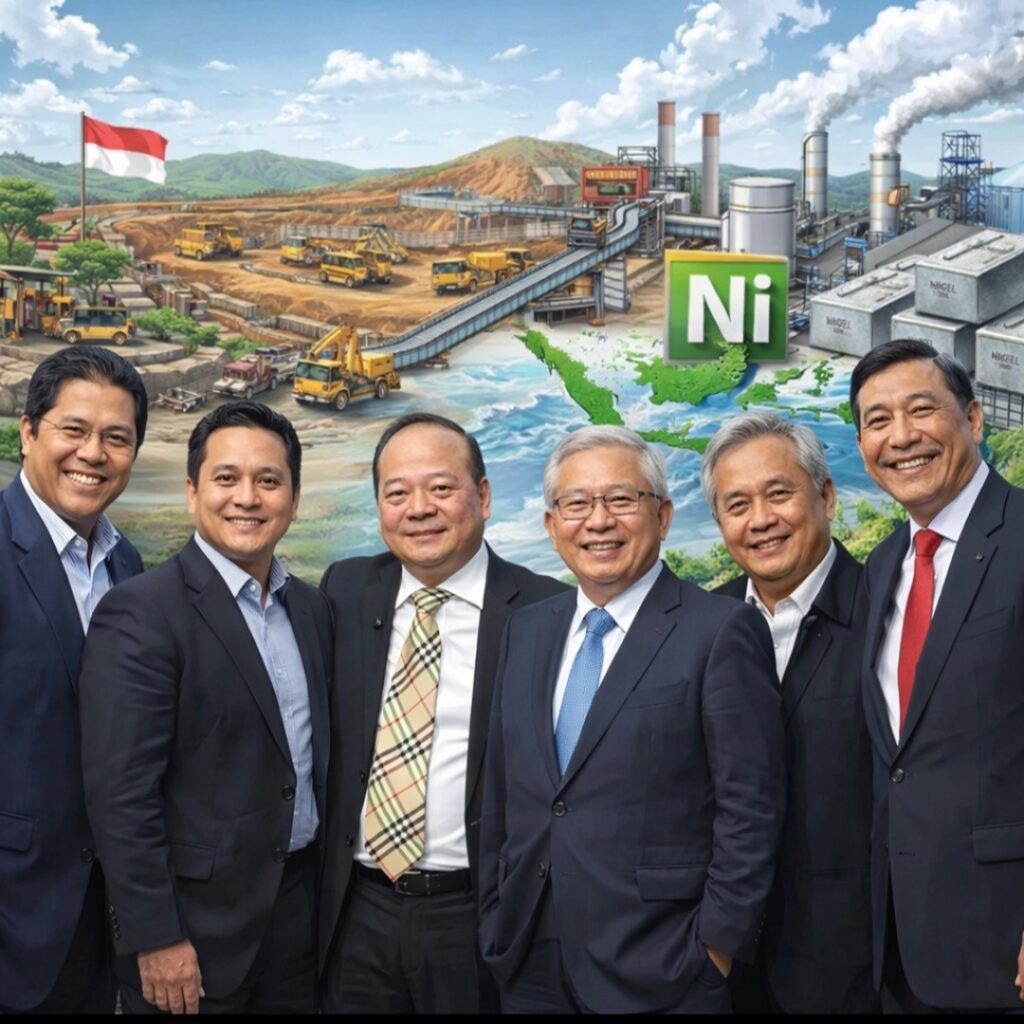
The ambitious $35 billion (approx. Rp500 trillion) investment by Chinese battery titan CATL in Indonesia’s nickel downstreaming sector has transitioned from blueprint to breakthrough.
As of 2026, the project—driven by Robin Zeng’s global dominance and Indonesia’s strategic positioning—stands as a cornerstone of the nation’s “Green Energy” roadmap.
The Strategic Foothold: From Karawang to Halmahera
Under the leadership of President Prabowo Subianto, the integrated battery ecosystem officially broke ground in Karawang, West Java, in mid-2025. Operated under PT CATIB and the CBL Consortium (CATL, Brunp, and Lygend), the project bridges the gap between raw nickel extraction in East Halmahera and high-tech battery assembly.
By late 2025, CATL solidified its global market share to nearly 43%, largely bolstered by its massive operational footprint in Southeast Asia’s largest economy.The Local Power BrokersThe entry of Robin Zeng—the world’s 29th richest person—into Indonesia was facilitated by a powerful network of local elites and state-owned enterprises (IBC and Antam):
Boy Thohir & Pandu Sjahrir: Both figures remain central to the narrative. Thohir, through the Adaro Group, provides the critical energy infrastructure required to power energy-intensive smelters.
Meanwhile, Sjahrir, via TBS Energi Utama, maintains a significant stake in the logistics and energy supply chain for the EV ecosystem.
Lim Hariyanto (Harita Group): As the “L” in the CBL Consortium, the Harita Group’s High-Pressure Acid Leaching (HPAL) facilities on Obi Island serve as the primary supply artery for CATL’s battery precursors.
Setiawan Ichlas: His industrial zones in Sulawesi and Maluku have become essential logistical hubs for CATL’s strategic partners.
Fiscal Incentives and the “Luhut Legacy”
A pivotal factor in securing CATL’s commitment was the aggressive fiscal “red carpet” rolled out during Luhut Binsar Pandjaitan’s tenure as Coordinating Minister. Central to this was the Tax Holiday scheme, offering up to 20 years of 100% Corporate Income Tax exemptions for pioneer industries. While the government argued this was necessary to outpace regional rivals, it drew heavy fire from critics.
The Dissent: A Legacy of Criticism
The late economist Faisal Basri remained one of the most vocal opponents of this model. Basri argued that the “downstreaming” (hilirisasi) policy was effectively a transfer of Indonesian wealth to Beijing.
His critiques focused on three core pillars:
Tax Revenue Loss: Basri contended that excessive tax holidays meant the Indonesian state was subsidizing wealthy Chinese conglomerates while sacrificing trillions in potential revenue.
Value Chain Imbalance: He warned that the “lion’s share” of value-added profits flowed back to China, as they owned the technology and the capital.
Pseudo-Industrialization: Basri famously termed the movement as “Chinese industrialization on Indonesian soil,” rather than a genuine advancement of domestic industrial capability.
Despite these controversies, the project remains a National Strategic Project (PSN). With the Karawang plant slated to begin operations by mid-2026, the alliance between Chinese capital and Indonesia’s business elite continues to reshape the global EV supply chain, for better or for worse.